
Why Your Contractor Website Gets Visitors but No Calls (and How to Fix It)
 Muhammad UbaidullahFounder & Lead Engineer, Malvora
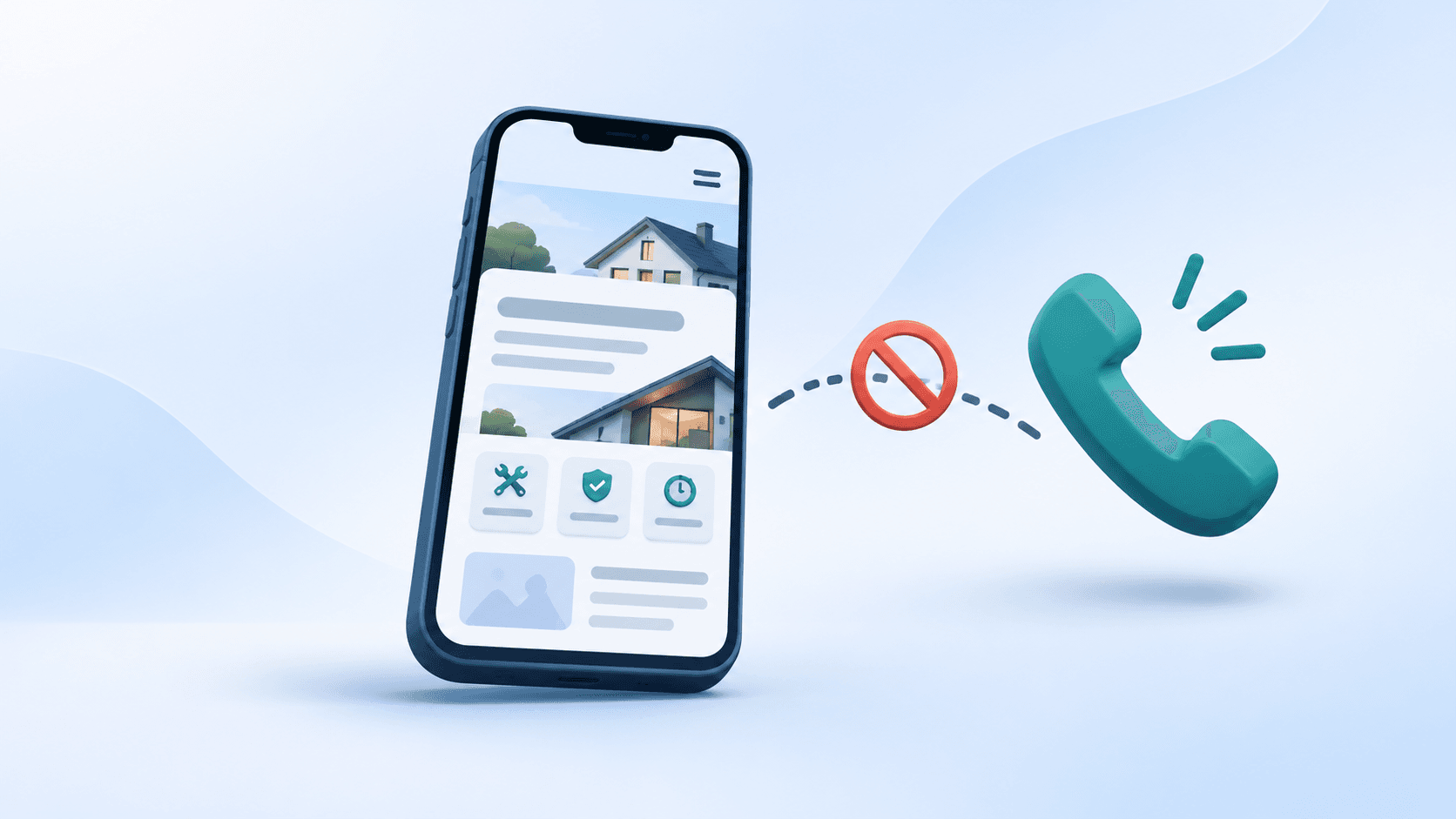
Your contractor website gets traffic but the phone stays quiet. 7 reasons home services websites don't bring calls, and a 10-minute check to fix it.
If your website gets visitors but your phone doesn't ring, the problem is almost never the design. It's usually that the site makes it hard for a homeowner in a hurry to trust you and contact you. This guide is for plumbers, HVAC techs, electricians, roofers, cleaners, landscapers and renovation companies. It covers the seven most common reasons a contractor website doesn't bring in calls, a 10-minute check you can do on your own phone today, and what to fix first.
Why a "nice" website can still fail
Most contractor websites are built to look good. That's not the same job as getting calls.
Think about who's actually visiting. A homeowner with water under the sink. A property manager whose tenant has no heat. Someone who needs a quote before the weekend. They're on a phone, often stressed, and comparing you with two or three other companies in other tabs. They aren't reading your story. They're asking three questions in a few seconds: do you do this job, do you work in my area, and how do I reach you right now?
If your site doesn't answer those three questions on the first screen, they hit the back button and call the next company. You'll never know they were there.
Reason 1: Your phone number is hard to find or can't be tapped
This is the most common problem and the cheapest to fix. Your phone number should be at the top of every page, and on a phone it should be a button that dials when tapped. Not an image of a number. Not a number hidden on the Contact page.
Add a "Call now" button that stays visible as people scroll on mobile. For many trades, a large share of visitors are on phones, and a visible call button removes the single biggest step between interest and a call.
Reason 2: The first screen doesn't say what you do and where
"Quality you can trust" doesn't tell a homeowner anything. "Emergency plumbing in Calgary and Airdrie, 7 days a week" does.
The headline on your homepage should name your main service and your service area in plain words. Underneath it, one line on why you (licensed and insured, upfront pricing, same-day appointments, whatever is genuinely true), and then the call button. Everything else can go further down the page.
Reason 3: One page tries to cover every service
If you do drain cleaning, water heaters and bathroom renovations, each one deserves its own page. When someone searches for "water heater replacement" in your city, Google wants to show them a page about water heater replacement, not a homepage with a list of twelve services.
Separate service pages help you show up in more searches, and they help visitors feel they're in the right place. Each page should explain the job in plain words, who it's for, roughly what's involved, and how to book.
Reason 4: There's no proof you're real and good
Homeowners are letting you into their house. Before they call, they want evidence you're trustworthy. Show your Google reviews (real ones, with names and dates), photos of your actual work and your actual team or trucks, your licences and insurance, and how long you've been in business. Stock photos of smiling models holding wrenches do the opposite of building trust.
Reason 5: The site is slow on a phone
If your site takes a long time to load on mobile data, many visitors won't wait. Common causes are huge uncompressed photos, heavy page builders, sliders and auto-playing videos, and cheap hosting. You can test your site for free with Google's PageSpeed Insights. If the mobile score is poor, it's worth fixing before spending money on ads.
Reason 6: The contact form asks for too much
A form with ten fields feels like paperwork. For a first contact, you need a name, a phone number, a short description of the job, and maybe a postcode. Everything else can be asked on the call.
Also check where form submissions actually go. It's surprisingly common for a form to send enquiries to an old email address nobody checks. Submit a test enquiry yourself and see how long it takes to reach you.
Reason 7: Nobody answers, or the reply is slow
Sometimes the website works and the leak is after it. If calls go to voicemail while you're on a job, or form enquiries get a reply the next day, homeowners will usually book whoever responds first. A website can only start the conversation. Something has to catch it: an office person, an answering service, an automatic text-back for missed calls, or an AI assistant that can answer common questions and take booking details at any hour.
Your website's job isn't to look good. It's to make the phone ring, and to make sure someone answers.
The 10-minute website check you can do today
Take out your phone, turn off Wi-Fi and open your website like a customer would.
Can you see what you do and where you work within a few seconds, without scrolling?
Is there a phone number you can tap to call, visible at the top?
Does the page load quickly on mobile data?
Can you find a page for each of your main services?
Can you see real reviews and real photos of your work?
Submit the contact form. Did the enquiry arrive, and how quickly?
Call your own number after hours. What happens?
If you got more than two "no" answers, your website is probably costing you work.
What to fix first
Start with the things that cost nothing or very little: make the phone number tappable and visible, rewrite the headline to say your service and area, and check the contact form actually reaches you. Next, add real reviews and real photos. Then split your services into their own pages and fix speed. A full redesign is only worth it if the site can't be fixed in place.
How Malvora approaches contractor websites
When we build or fix a website for a home services business, we start from one question: what should a homeowner do in the first ten seconds? Everything is arranged around calls and bookings. Clear service and area pages, real proof, a fast mobile site, and enquiries that reach you instantly. Where it helps, we connect a missed-call text-back or an AI assistant so leads aren't lost while you're on a job. Fixed scope, fixed price, and you own the site.
Frequently asked questions
How much traffic should a contractor website get?
There's no single number. It depends on your trade, your area and your competition. What matters more is the share of visitors who call or send an enquiry. If people visit but don't contact you, fix the website before spending more to bring traffic.
Do I still need a website if I have a Google Business Profile?
Your Google Business Profile is often where customers find you first, so keep it complete and active. But a good website gives you service pages that show up in more searches, room to explain your work, and a place your ads and profile can send people.
Should my contractor website show prices?
If you can give honest starting prices or price ranges for common jobs, it can build trust and filter out poor-fit enquiries. For jobs that vary a lot, explain what affects the price and offer a free estimate instead.
How long does it take to fix a website that isn't getting calls?
The quick fixes in this guide can often be done in a day or two. A rebuild with proper service pages takes longer, depending on how many services and areas you cover.
Want a second pair of eyes on your website? Book a Free Call. We'll tell you what's stopping your site from bringing in calls, and what it would take to fix it.
Every insight here comes from real projects. If something resonates with a challenge you’re facing, tell us about it on a free 30-minute call, whether you run a business or are building a product.
Want this applied to your project?
Running a business or building a product? Book a free 30-minute call. Fixed quote after.
More insights